When Tools Make Bad Audio Sound 'Good, Who Loses?
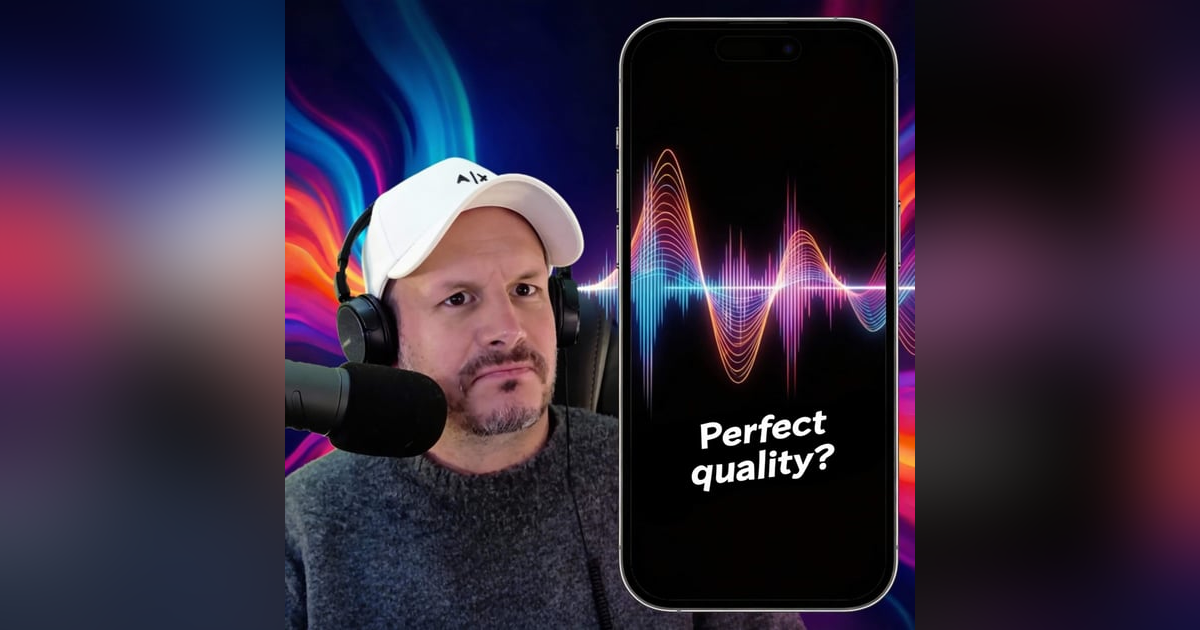


A lot of people are excited about AI tools that promise instant, studio-quality podcast audio.
Record on your phone. Click a button. Sound professional.
But that story deserves a closer look.
Hi, I'm Neal Veglio, founder of Podknows Podcasting and the Podmastery community.
In this episode of Podcasting Insights, I unpack what happens when technology starts erasing the difference between effort and outcome — and ask what podcasting quietly loses when “good sound” becomes a default instead of a craft.
This isn’t an anti-AI rant.
And it’s not about gatekeeping beginners.
It’s about incentives.
Standards.
And what we’re rewarding at scale.
You’ll learn:
• Why AI audio tools raise standards and lower effort at the same time
• How one-click fixes create a podcasting “house sound”
• The difference between accessibility and erasing craft
• Why effort still matters, even when listeners can’t hear it
• The question creators should be asking before relying on AI cleanup
Links:
Waves Voice Regen:
https://www.waves.com/voice-regen
I’d love YOUR feedback:
https://www.podmastery.co/survey
I’ve been doing this for 20+ years and run a successful podcast marketing agency.
Want me to audit your podcast?
Mentioned in this episode:
A Podknows Production
Podknows helps brands and creators to build their podcasts into virtual sales and marketing teams which get them results even when they're sleeping. Find out more at https://podknows.co.uk/
let me ask you something.
Speaker:If someone records a podcast episode on their phone and then someone else spends
Speaker:years technique, out acoustic control,
Speaker:sound
Speaker:design.
Speaker:General production and publication, should they sound the same?
Speaker:Do they have a right to, is
Speaker:that fair?
Speaker:Because
Speaker:that's the direction we're heading in.
Speaker:Let me take a moment to let you know about this voice region.
Speaker:you heard the clip That was the demo video from this new tool from Waves Audio.
Speaker:Now, waves have got a lot of respect for Waves.
Speaker:They've been in the audio software game for many years and I know about
Speaker:them because they do a plugin for Adobe Audition, which I've used for many years,
Speaker:along with Isotope RX tools as well.
Speaker:They're kind of competitors in the space.
Speaker:And the idea behind these tools is that you put terrible audio into them
Speaker:and then they clean it up, and some do it better than others, but generally
Speaker:speaking, waves is one of the good ones.
Speaker:So the idea is record your content, click one button, upload your audio.
Speaker:Echo gone.
Speaker:Background noise.
Speaker:Gone.
Speaker:Studio quality sound comes in.
Speaker:The idea being that if you are either strapped for cash or you don't
Speaker:want to invest in decent equipment, you can record stuff on your phone
Speaker:or on your laptop, Mike, and it sounds like you're in the studio,
Speaker:I've got mixed feelings about this.
Speaker:On one hand for the listener experience, it's great.
Speaker:It's raising standards even when people don't really wanna put any
Speaker:effort in to raising standards.
Speaker:On the other
Speaker:hand,
Speaker:that it's raising standards, even when people don't wanna put the effort in
Speaker:to raise standards, and it's lowering the cost of entry to sound incompetent.
Speaker:So
Speaker:it seems to me like we're not rewarding the craft anymore.
Speaker:We're not rewarding the effort.
Speaker:We're not rewarding the learning, the development, the mastery.
Speaker:We're rewarding someone having access to a credit
Speaker:card.
Speaker:Now,
Speaker:look, don't get me
Speaker:wrong, there is something quite heartwarming and noble about
Speaker:lowering barriers to entry.
Speaker:I'm
Speaker:a gatekeeper.
Speaker:I don't wanna be
Speaker:a gatekeeper.
Speaker:The only thing I gatekeeper around is people that come in from a
Speaker:completely unrelated space, like
Speaker:hr.
Speaker:or accounting.
Speaker:And business dries up and they think, oh, I've listened to a podcast words,
Speaker:I'm gonna become a podcast consultant.
Speaker:And that happens far more often than you might think.
Speaker:That's where I do tend to be a gatekeeper, because it's people's
Speaker:money and livelihoods at risk.
Speaker:I'm
Speaker:not a gatekeeper
Speaker:against one person being allowed to enter the podcasting space over another.
Speaker:That's not fair.
Speaker:Everyone's entitled to try something.
Speaker:So there is something really good about lowering those barriers.
Speaker:But there's something dangerous about pretending the effort
Speaker:doesn't
Speaker:matter.
Speaker:And that's essentially what we're saying here.
Speaker:you got the
Speaker:serious Who
Speaker:spent
Speaker:three to 500 quid
Speaker:on a mic.
Speaker:They've invested in treating their room acoustic treatments so it sounds decent,
Speaker:and they've spent time learning sound, how to edit what sounds good in the mix.
Speaker:you've got the lazy influencer their iPhone stands in the kitchen.
Speaker:kitchen.
Speaker:Does zero prep.
Speaker:Doesn't need to learn editing,
Speaker:doesn't
Speaker:need to bother learning sound design, and yet their content pops.
Speaker:So the question I would ask is this,
Speaker:If
Speaker:both outputs are valid and.
Speaker:seemingly functionally identical,
Speaker:What behavior are we incentivizing here?
Speaker:Because
Speaker:the markets tend to
Speaker:reward
Speaker:what's cheapest at scale.
Speaker:the thing
Speaker:that I think a lot of people are gonna be overlooking with
Speaker:this
Speaker:story.
Speaker:many other stories like it.
Speaker:when a new exciting tool goes to market and allows everyone to sound
Speaker:like they've recorded in the studio, even if they actually recorded with
Speaker:a sock wrapped around their iPhone.
Speaker:Tools like this are not simply cleaning up
Speaker:audio.
Speaker:That's the surface
Speaker:level thing they do.
Speaker:What tools like this are doing is they're creating a house sound.
Speaker:What I mean by that is you go to a supermarket and you get
Speaker:the house
Speaker:wine, as
Speaker:in.
Speaker:the wine that you will see in wine racks up and down the country
Speaker:versus.
Speaker:The wine.
Speaker:Wine that someone is proud to display might have cost them a lot more.
Speaker:Maybe they've had to research it.
Speaker:They've got knowledge of wine, so their
Speaker:bottle
Speaker:out in the rack of house wines, and that's what's happening with podcasting
Speaker:At the moment, really
Speaker:good.
Speaker:Podcasts do stand out still.
Speaker:what they sound like, they stand out.
Speaker:You can tell the difference in recording quality editing, quality
Speaker:production, quality, just the general production standards that the
Speaker:publishers have had behind the project.
Speaker:But we're creeping away from that, and once platforms start to expect that sound.
Speaker:That becomes the standard and the norm.
Speaker:anything
Speaker:outside of that is going to feel wrong, the wall.
Speaker:So other content won't be
Speaker:banned.
Speaker:It'll just be discouraged, ignored, mocked.
Speaker:And that's how a medium stops evolving, not through rules, but through defaults.
Speaker:judge in the independent podcast awards, and every year I attend that event
Speaker:and we reward independent creators
Speaker:who may not have the best
Speaker:sounding podcasts.
Speaker:but the
Speaker:creativity and their vision carries them towards an award.
Speaker:But what's gonna happen if people who are spending their time
Speaker:out
Speaker:the creativity and the content side of things, but aren't
Speaker:necessarily that invested in.
Speaker:Dampening their audio with a one click fix is all
Speaker:tool.
Speaker:Are we now going to
Speaker:punish them because their podcast
Speaker:sounds a little bit different?
Speaker:It sounds a little bit more, I don't know, rustic than the studio quality
Speaker:podcasts that are flooding the platforms.
Speaker:Now look, let me be completely transparent.
Speaker:As someone
Speaker:that
Speaker:invests time and money into creating high quality sounding studio level podcasts.
Speaker:Yeah, there's an element of, oh,
Speaker:I'm
Speaker:not
Speaker:sure I want Pretenders
Speaker:to the throne coming in
Speaker:and doing what I do in a fraction of the time at a commoditized cost.
Speaker:Of course, there's an element of that, but there's also an element of the art.
Speaker:getting
Speaker:lost.
Speaker:For example,
Speaker:in podcast episodes, I don't just one click fix all the audio.
Speaker:Some of the audio I leave to breathe let it sound as it was
Speaker:recorded, and that makes it stand
Speaker:out.
Speaker:But where
Speaker:we those moments won't stand out anymore.
Speaker:So here's the question that I can't shake.
Speaker:If technology is allowed to erase
Speaker:the difference between
Speaker:effort and laziness, what exactly are we telling creators now and
Speaker:how long until our listeners can't tell the difference either?
Speaker:either?
Speaker:I've been the lio, the podcast master,
Speaker:and I'd like to thank you for taking the time to listen to my
Speaker:thoughts on this particular topic on the show, podcasting Insights.
Speaker:if you think somebody else might find this episode useful or interesting,
Speaker:please do share it with them.
Speaker:And if you haven't yet, please do follow the podcast in your favorite podcast app.
Speaker:in the meantime, good luck with your ongoing journey towards
Speaker:attaining Pod Master three.